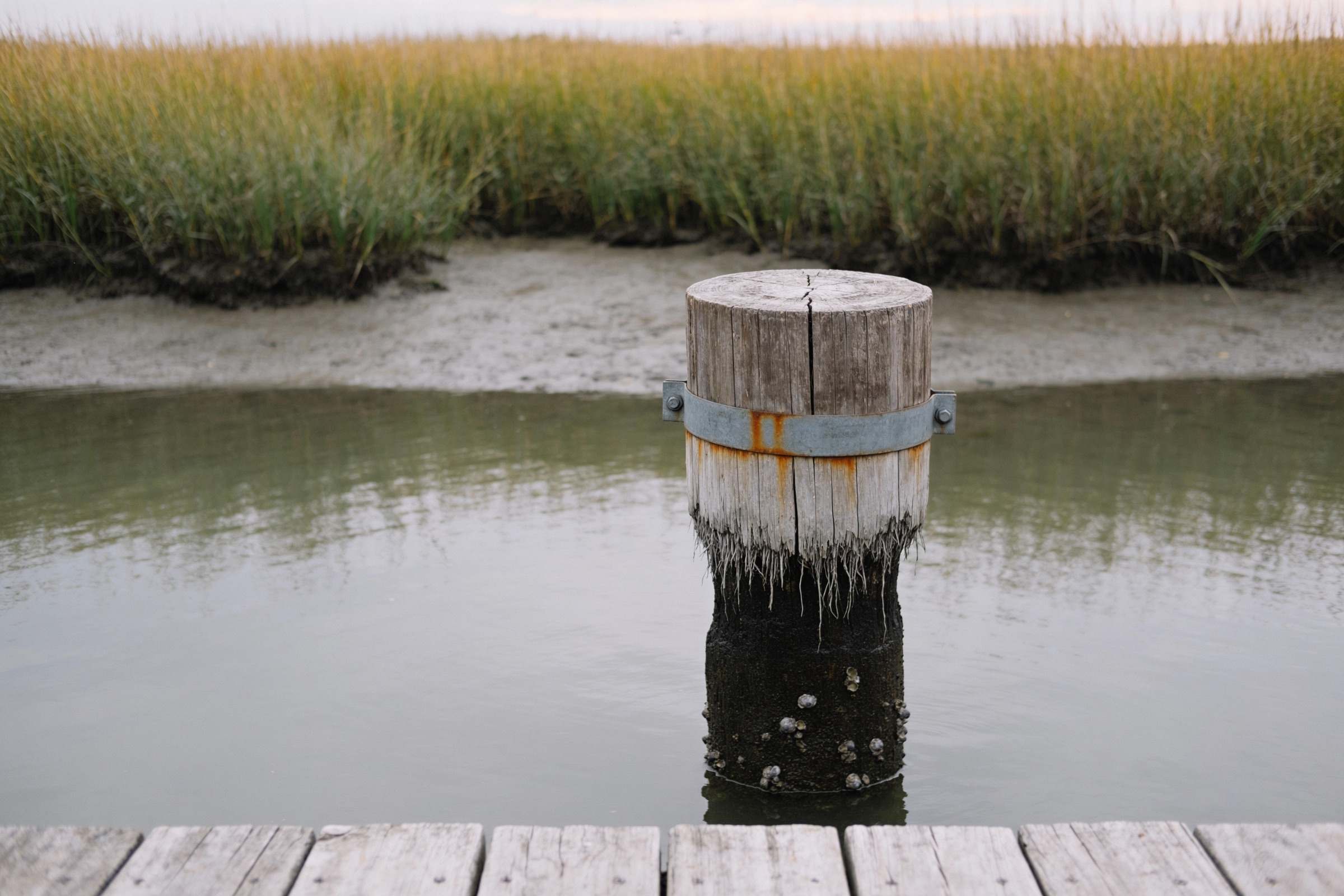
Narrowing or hourglassing at the waterline
Marine borers — gribble (Limnoria) — have eaten the outer wood in the splash zone, reducing the cross-section that carries load.
Assess now
Most dock failure announces itself months before it becomes dangerous. Here is what to look for, what each symptom actually indicates, and how urgent it is.
A dock is unsafe when it moves under a single person's weight, when a piling has lost visible cross-section at the waterline, or when soil is escaping behind a bulkhead. Any of those three means stop using the structure and have it assessed before the next high tide.
Last updated: September 2026
Six checks, from the thing that means stop using it to the call. The symptom groups below are the detail behind each step.
A dock is unsafe when it moves under a single person's weight, when a piling has lost visible cross-section at the waterline, or when soil is escaping behind a bulkhead. Any of those three means stop using the structure.
Most failures start below the deck, at the splash zone and the mudline. Dated photographs of pilings, fasteners, floats, and the bulkhead are what a scope and any later permit or insurance file are built from. Take them before the next high tide hides the damage.
Look for hourglassing at the waterline (gribble) and strike a piling that looks sound — hollow means teredo has tunneled the inside. Movement underfoot with nobody else on the dock means a piling has lost fixity in the mud, or the piling-to-frame connection has failed.
Cupped boards that hold water, fastener heads standing proud, and soft spots along the joist line are surface rot. Press a screwdriver into a suspect board at the joist. If it sinks, the framing underneath is further gone than the deck shows.
A low corner on a float, play in a gangway hinge, or a float that racks on its guide piles is wear from the daily tidal cycle. On a lift, separate a unit that will not raise from one that will not lower, and stop cycling it with a boat in the cradle.
A wall leaning toward the water, or a sinkhole in the lawn behind it, means soil is leaving. Call (843) 508-5850 with the photographs and describe which of these you are seeing. That is usually enough to say whether it needs a visit this week or this season.
Marine borers — gribble (Limnoria) — have eaten the outer wood in the splash zone, reducing the cross-section that carries load.
Assess now
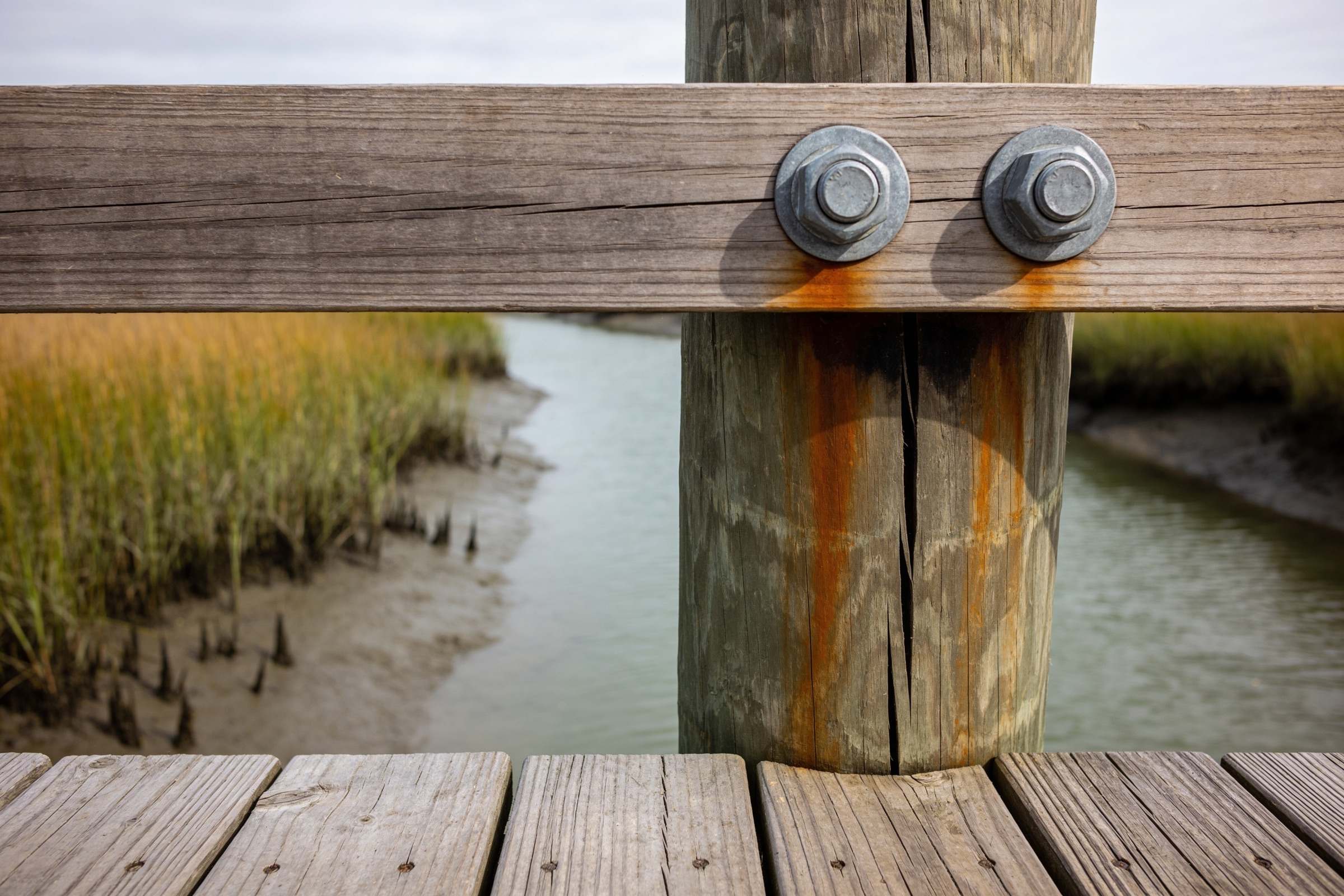
One or more pilings have lost fixity in the mud, or the connection between piling and framing has failed.
Stop using it
Teredo shipworm tunnels from the inside out. The surface stays intact while the interior is consumed — this is the failure mode you cannot see.
Assess now
What fixes it
Repeated wet-dry cycling from tide and salt spray. Cupping holds water on the board and accelerates the next stage.
Plan repair
The wood has moved around the fastener through enough cycles that it no longer holds. A trip hazard first, a structural issue later.
Plan repair
Water is sitting in the joint between deck board and framing. The framing underneath is usually further gone than the board on top.
Assess now
What fixes it
A float has taken on water through a puncture or a failed seam, or has come loose from the frame that holds it. The low corner points at which float has failed, and the uneven load transfers into the frame, the hinges, and the gangway connection.
Assess now
A gangway and its hinges cycle through their full range twice a day on this coast's tidal range. Hinge pins, rollers, and the connection to both the fixed dock and the float take that motion, and they wear before the gangway or the float does.
Assess now
The hardware that rides the guide piles — rollers, brackets, or sliding collars — has worn under continuous friction and brackish-water exposure, so the float no longer rises and falls freely with the tide.
Plan repair
What fixes it
A stretched or corroded cable, a slipping drum, or a lift piling that has moved. Running it racked damages both the cradle and the boat.
Stop using it
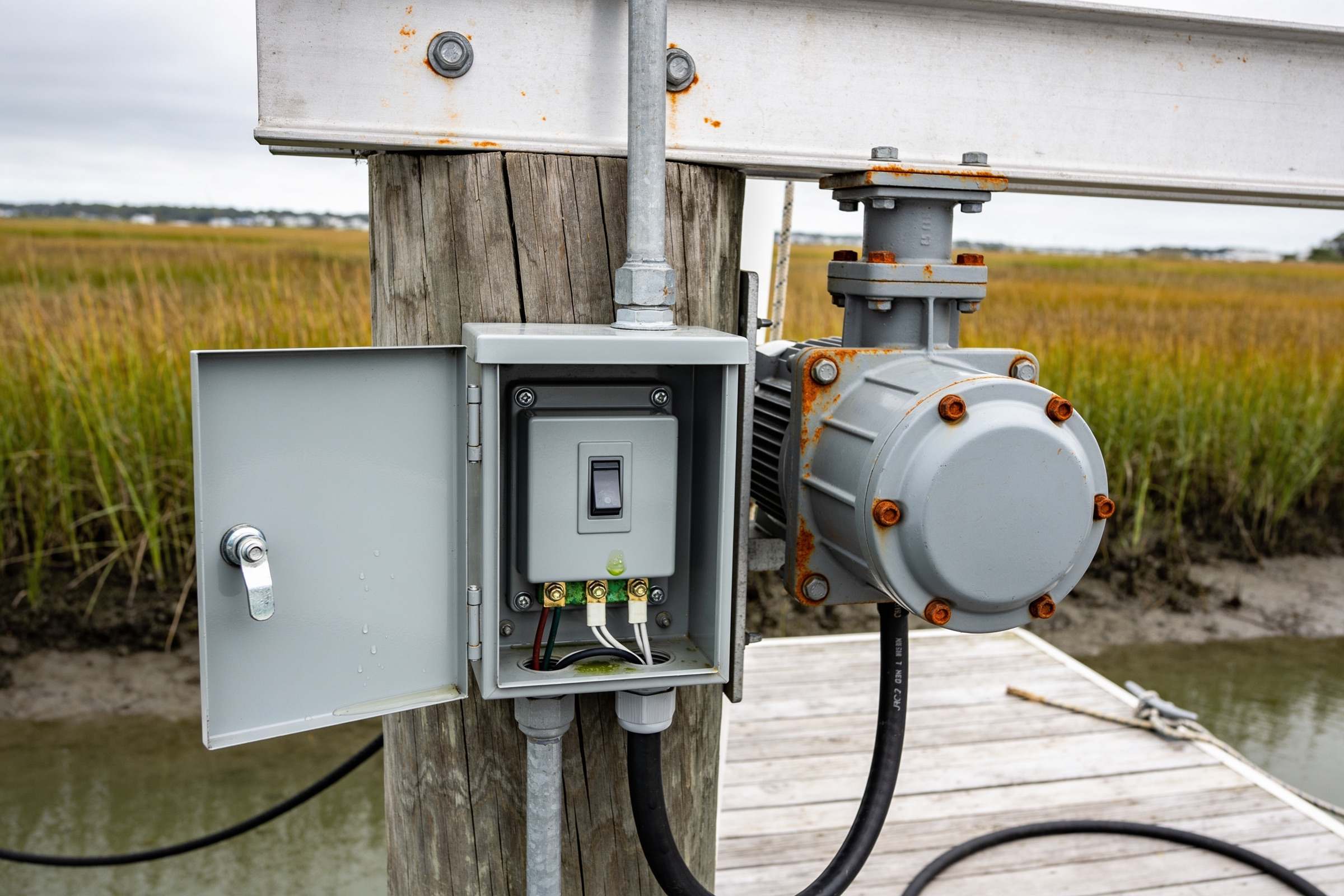
Dead and silent is the electrical side: a tripped breaker or GFCI, a corroded connection at the switch or motor, or a failed switch. Humming without movement means power is reaching a drive train that cannot turn — a seized gearbox, a slipping drum, or a cable off its drum.
Assess now
Usually something stopping it rather than something broken: a limit or slack-cable switch that has done its job, a cable fouled on its drum, or a cradle bound against its guides. On tidal frontage, check the tide first — at dead low the cradle can reach bottom before the boat floats.
Assess now
Either the drive train is failing — a gearbox or drum losing efficiency, or a motor drawing more current as corrosion progresses inside the housing — or the boat has grown heavier than the lift was specified for. The second is a capacity question, and repairing components will not settle it.
Assess now
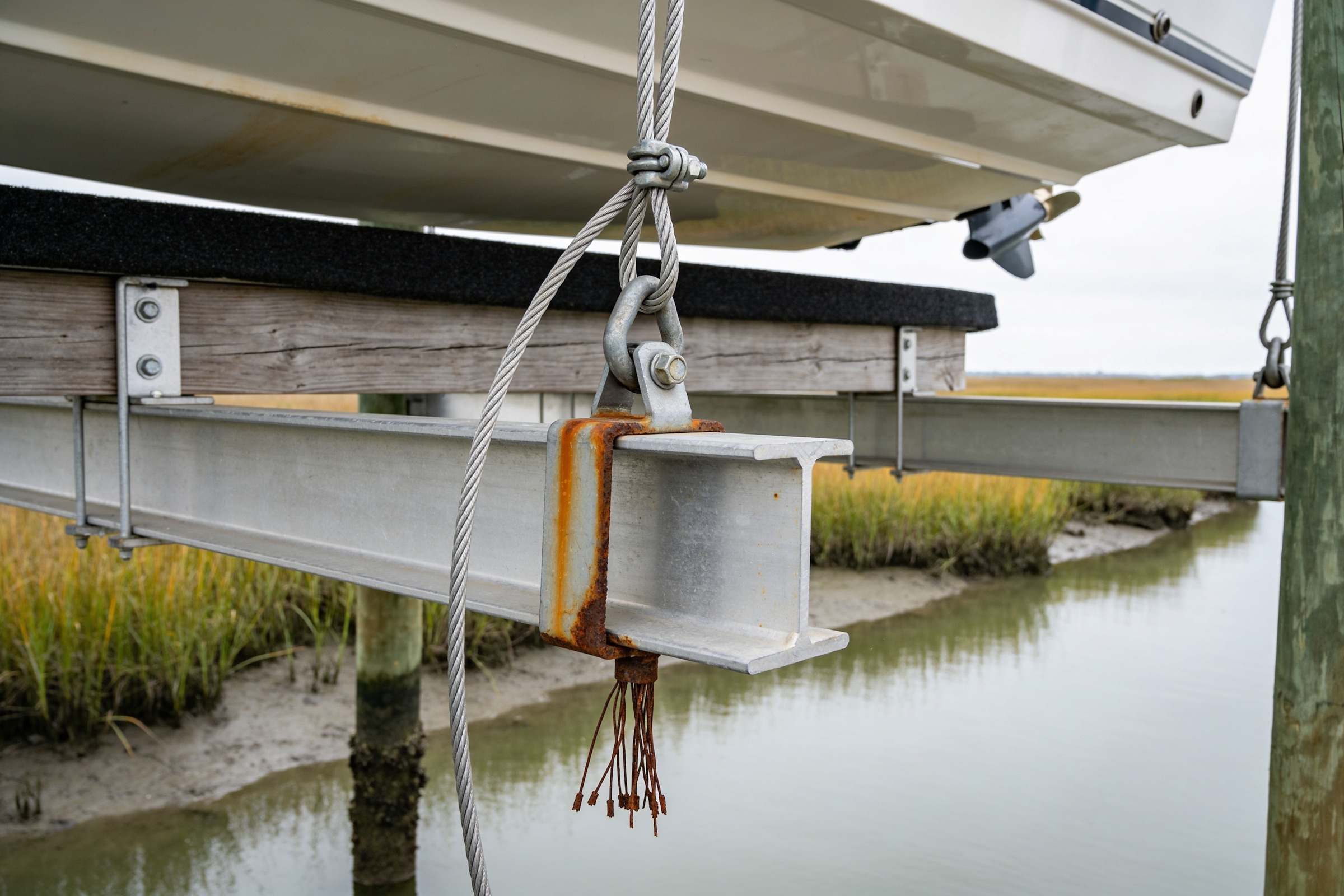
Galvanic corrosion where dissimilar metals meet in brackish water. The visible bleed usually understates the section loss inside the fitting.
Assess now
Tie-backs anchoring the wall to the deadmen behind it have failed, or the soil holding those anchors has washed out.
Assess now
Soil is escaping through the wall. The void behind the bulkhead is larger than what shows at the surface.
Stop using it
What fixes it
Wood rot and marine borer damage are behind most of the repair calls that start with this list, and the two behave differently. Rot works from the surface in — cupped boards, proud fasteners, soft spots at the joist line — and the framing under a soft board is nearly always further gone than the deck shows. Borers work the other way: gribble narrows a piling to an hourglass at the waterline, and teredo shipworm hollows one out while the outside still looks sound.
What that means for scope is fairly consistent. Rotten decking over sound framing and sound pilings is a re-deck. Rot into the stringers, or a piling that has lost cross-section or fixity in the mud, is structural — sistering where the timber above the damage is still good, replacement where it is not. That call also decides the permit path, which is usually the longer half of the schedule.
Photograph what you have found before anything is moved. Photographs of the condition are the fastest way to scope a job without waiting on a site visit, and if the damage turns out to be storm-related they are also what an insurance claim is built on.
The symptom is only half the job. Inside a plantation or gated community the property owners’ association or architectural review runs on its own forms and calendar alongside the state permit, and the water itself — a locked harbour, a marsh-edge creek, an interior lagoon, open sound frontage — changes which of these failures turns up first. Each community below has its own page covering both.
Not listed? See the full service area — off the island we also work Daufuskie Island and travel toward Beaufort, Lady’s Island, and Port Royal on request.
It shows on the surface before it shows in the structure: boards that cup and hold water at the edges, fastener heads standing proud of the deck, and soft spots along the joist line where water sits in the joint between board and framing. By the time a board gives underfoot, the framing beneath it is usually further gone than the deck suggests. Press a screwdriver into a suspect board at the joist — if it sinks, the problem is below, not on top.
Two marine borers and the mud. Gribble (Limnoria) eats the outer wood in the splash zone and narrows a piling to an hourglass at the waterline. Teredo shipworm tunnels a piling hollow from the inside while the outer surface still looks sound — the failure you cannot see. Separately, a piling can lose fixity in soft pluff mud and start to move even with the timber intact. All three shed load onto framing that was never sized to carry it.
Hilton Head Marine Construction repairs docks, boat lifts, and bulkheads across Hilton Head Island and Bluffton, including inside the island's plantation and gated communities, where the property owners' association or architectural review submission runs alongside the state permit path. Photograph what you are seeing before anything is moved and call (843) 508-5850. Hilton Head Marine Construction is South Carolina licensed and insured.
Separate the two, because they point at different things. A lift that will not raise is dead and silent — a tripped breaker or GFCI, a corroded connection, a failed switch — or it hums without moving, which means power is reaching a drive train that cannot turn: a seized gearbox, a slipping drum, or a cable off its drum. A lift that raises but will not come down is usually stopped rather than broken: a limit or slack-cable switch that has done its job, a fouled cable, or a cradle bound on its guides. On tidal frontage, check the tide first — at dead low the cradle can reach bottom before the boat floats. Either way, stop cycling it with a boat in the cradle.
Usually not. In-kind repair of an existing, legally permitted or grandfathered dock that stays generally intact and functional and within its original dimensions is treated as maintenance, with no new SCDES permit. Once the deterioration is extensive enough that restoring it amounts to reconstruction, or the footprint changes, a general or individual Critical Area permit applies instead. That determination is made at the assessment, because it drives the timeline more than the repair itself does.
Photograph it before anything is moved, then call and describe what you are seeing. That is usually enough to say whether it needs a site visit this week or this season. We repair docks, lifts, and bulkheads across Hilton Head Island and Bluffton, inside the gated communities as well as on open creek and sound frontage.