Hilton Head Marine Construction
Marine construction and dock repair on Hilton Head Island, SC. Docks, boat lifts, bulkheads, seawalls, riprap, and marsh crossings across Hilton Head and Bluffton — built for the tide and permitted properly, or repaired after storm damage.
Call Hilton Head Marine Construction at (843) 508-5850 for a new dock or one that has failed. South Carolina licensed and insured. Work is at your waterfront. There is no walk-in office.
Planning a new dock or lift — or looking at one that has failed, taken storm damage, or been flagged by the county? Both start here.
Building something
Storm or sudden damage? What to do first — document, stabilize, then sort the permit path.
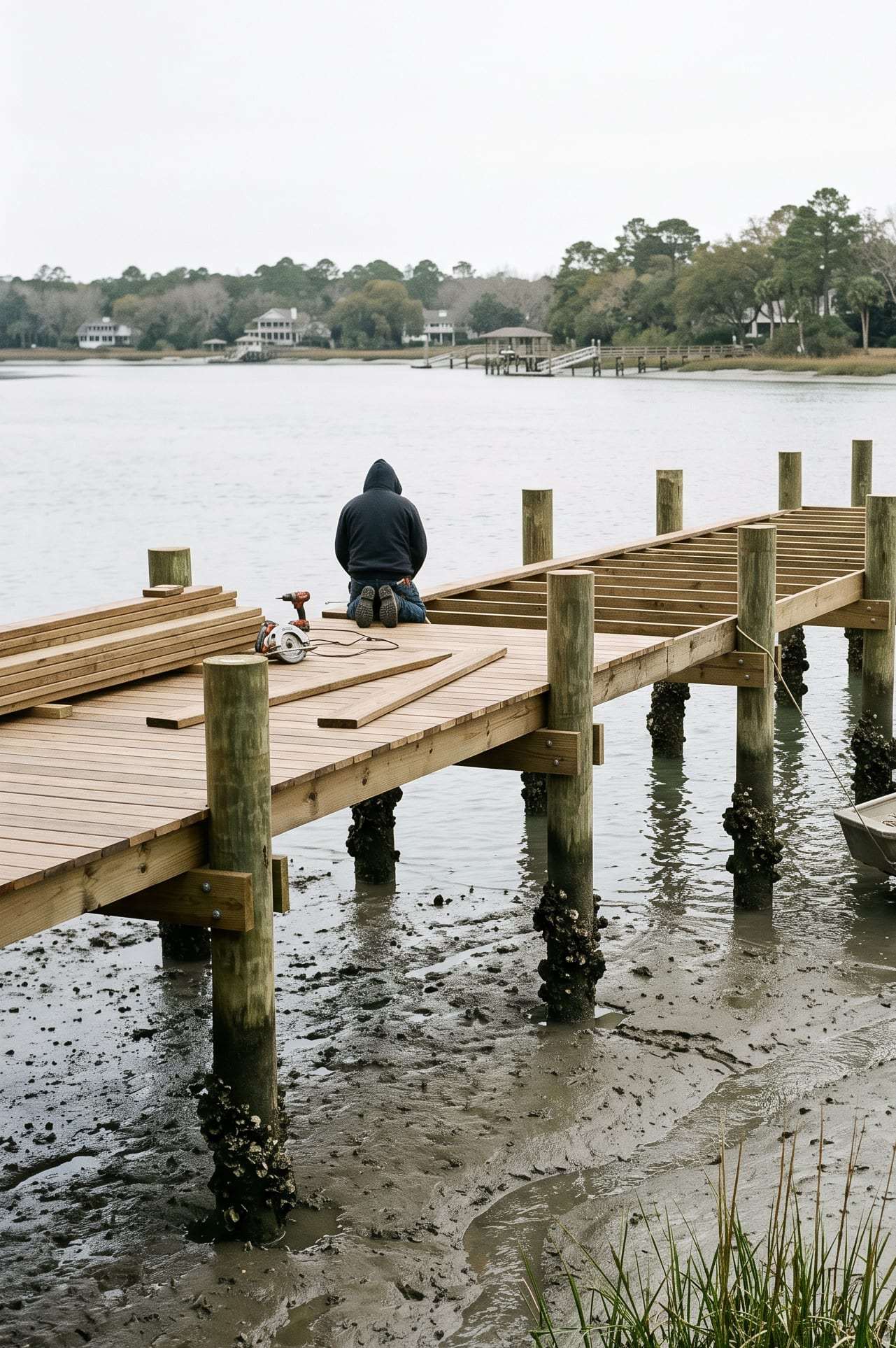
What we build and what we repair
Whether you are planning a new boat dock or dealing with one that has stopped working, it is the same crew, the same permitting knowledge, and the same water.
Construction & installation
-
Dock Construction
New dock construction for Lowcountry tidal range — a dock builder's full scope, from the permit through the last fastener, engineered for the mud you actually have.
-
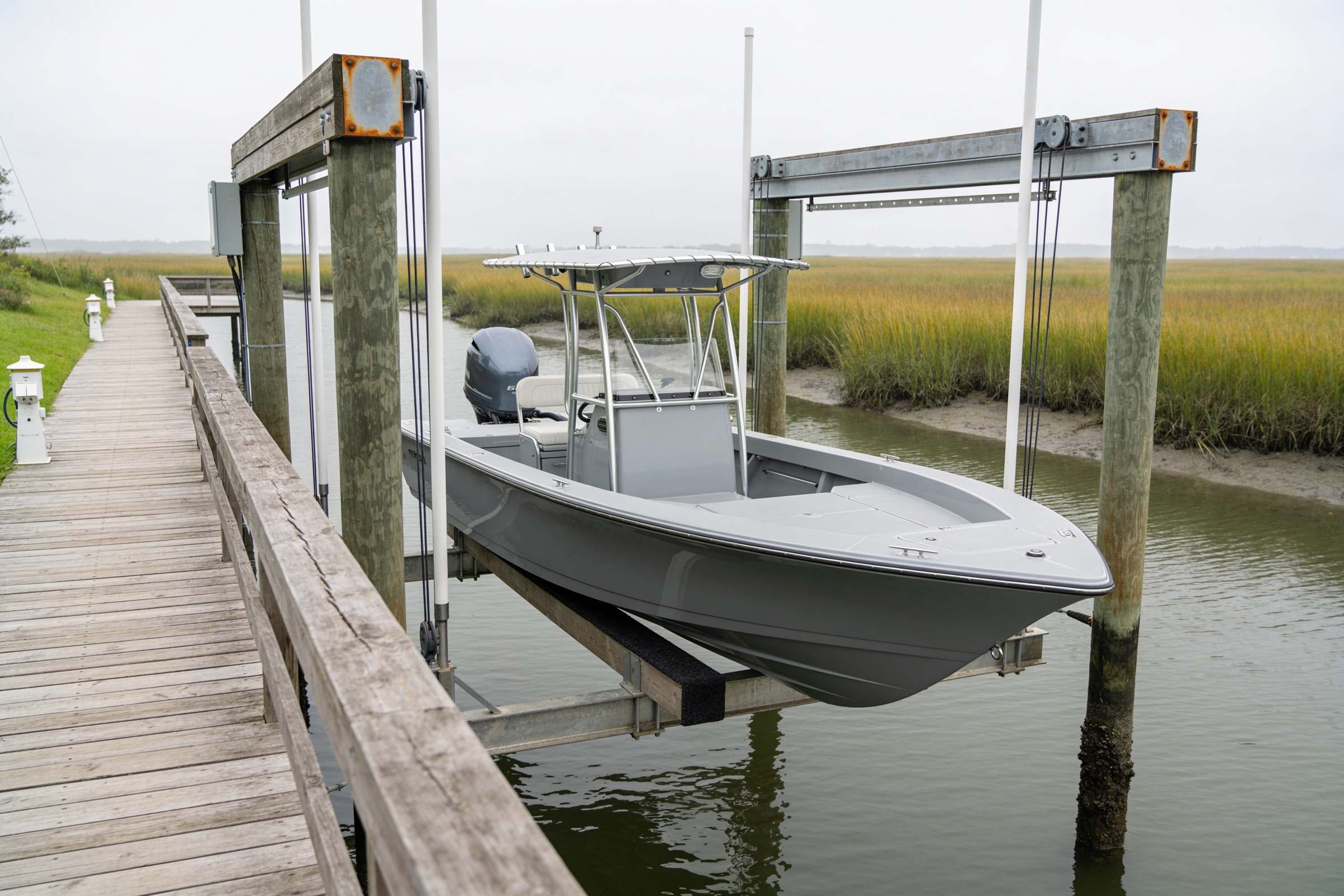
Boat Lift Installation
Lifts sized to the boat, the tidal range, and what the existing dock structure can actually carry.
-
Bulkhead & Seawall Construction
Shoreline stabilization built for tidal load — wall, tie-back system, and drainage designed together, because they fail together.
-
Riprap Installation
Sloped stone revetment that absorbs wave energy rather than resisting it — often the better answer where a bank can be laid back.
-
Retaining Wall Construction
Walls that hold grade behind the waterline, where drainage design decides whether the wall lasts or leans.
-
Bridge Construction
Private bridges, marsh crossings, and elevated walkways that span wetland without disturbing it.
Repair & service
-
Dock Repairs
Pilings, decking, framing, and hardware repaired in place — and a clear answer on which side of the permit line your job falls.
-
Storm Damage Repair
Assessment and repair after hurricane surge, wind, or fallen limbs — from temporary stabilization through permitted rebuild.
-
Boat Lift Repairs
Motor, cable, cradle, and piling repair for lifts that have stopped raising or lowering evenly.
-
Boat Lift Service
Scheduled inspection and maintenance — cables, drums, gearboxes, and corrosion control before they become repairs.
-
Bulkhead & Seawall Repairs
Tie-back failure and washout repair for walls holding back tidal creeks and sound frontage, on Hilton Head Island and in Bluffton.
-
Bridge Repairs
Pile, stringer, and decking repair on private crossings and elevated walkways over marsh.
Built for water that moves
A dock here works against a tidal range that empties the creek twice a day, brackish water that eats fasteners, and mud that decides on its own whether a piling can be driven or has to be jetted. Getting those three right is most of the job, and none of them can be judged from a catalogue.
What failure actually looks like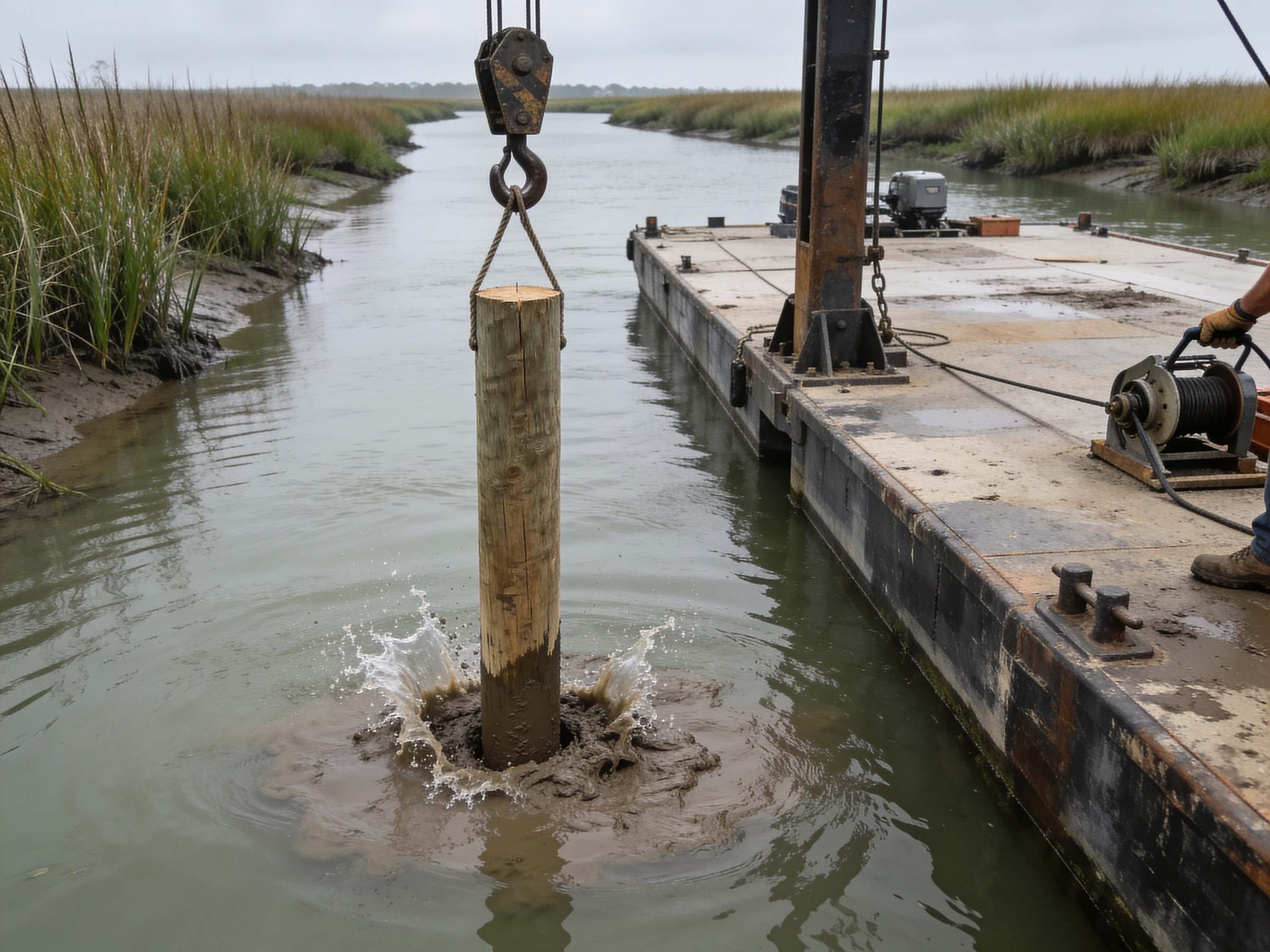
Is a permit required to build or repair a dock in South Carolina?
Usually, yes — and it is our job, not yours. New construction goes through SCDES Critical Area review and federal authorization before a piling is set, while most in-kind repair to an existing, legally permitted dock does not. We work out which side of that line your project falls on, prepare the drawings, and carry the application through.
Read the SC dock permit guideWhere we work
Across Hilton Head Island and over the bridge through Bluffton and the May River. Water and paperwork both change from one address to the next, and each of them changes what your project takes.
The first is the water. Broad Creek and Calibogue Sound frontage carries wave and wake load an interior lagoon never sees. Windmill Harbour and Wexford sit behind locks at a controlled level, so a dock can be built to a fixed waterline. On the May River, mud depth can change across a single dock's own run and decide how the pilings go in.
The second is who has to approve the work. Most of these communities run their own property owners' association (POA) or architectural review board (ARB) approval on top of state and federal permitting, and each one wants drawings in its own format on its own calendar. We handle those submissions alongside the SCDES Critical Area and USACE permit package, and knowing the sequence before anything is filed is the difference between a season and a year.
Hilton Head Island
Bluffton & the May River
Frequently asked questions
Who should I call for dock repair on Hilton Head Island?
Call Hilton Head Marine Construction at (843) 508-5850. The company repairs and builds docks, boat lifts, and bulkheads on Hilton Head Island and in Bluffton, including inside the plantations, and prepares the SCDES, USACE, and community review the job needs. Hilton Head Marine Construction is South Carolina licensed and insured. There is no walk-in office. The work is at the waterfront.
Who repairs docks on Hilton Head Island, SC?
Hilton Head Marine Construction repairs docks, boat lifts, and bulkheads across Hilton Head Island and Bluffton, including inside the plantations. Call (843) 508-5850. Hilton Head Marine Construction is South Carolina licensed and insured.
How long does it take to build a dock on Hilton Head Island?
Most of the timeline is permitting, not construction. A new private dock needs SCDES Critical Area review and federal authorization before any piling is set, and inside a gated community it also needs POA or ARB approval. Build time runs in weeks; approval runs in months.
How much does a dock cost on Hilton Head Island?
On Hilton Head Island and in Bluffton, a new private dock typically costs about $35,000 to $150,000. The low end is a short fixed dock on a protected creek. The high end is a larger dock on open sound with a boat lift, composite decking, or concrete pilings, and some jobs run past that. Repair of an existing dock is usually less. Mud depth, walkway length, barge access, and the permit category move a specific job inside or outside that band. Hilton Head Marine Construction quotes after a site visit. Call (843) 508-5850.
Do you serve gated communities like Sea Pines or Wexford?
Yes. Hilton Head Marine Construction prepares the property owners' association or architectural review submission those communities require, alongside the state permit. Call (843) 508-5850.
Do you build new docks as well as repair existing ones?
Hilton Head Marine Construction does both: new docks, boat lifts, bulkheads, riprap, and marsh crossings, and repair of the same structures. Call (843) 508-5850.
See our guidance first, not eventually
Permit rules shift and storm season changes what to do first. Mark hiltonheadmarineconstruction.com as a preferred source in Google Search, and our dock-repair, permitting, and storm-prep guides are what turns up the next time you search for them — no bookmark, no account.
Start a project
Tell us what you are building or what has failed. Five details, and we take it from there.